Dokan Pro eCommerce Marketplace Plugin
A WordPress marketplace plugin for multiple sellers, with vendor dashboards, flexible commissions, product tools, payment gateways, shipping options and sales reports.
Instant access Original unmodified files Free future updates

A multi-vendor marketplace needs more than a product catalogue. It needs a way for each seller to manage products, orders and earnings without handing every task to the site owner. Dokan Pro eCommerce Marketplace Plugin is built around that division of work, placing separate store management tools in a frontend vendor dashboard while giving the marketplace operator control over commissions and selling options.
Marketplace foundation
Dokan Pro is intended for entrepreneurs and businesses building a marketplace in which multiple sellers operate their own stores under one site. The central idea is straightforward: vendors receive tools for day-to-day shop management, while customers browse and buy from the wider marketplace. That makes the plugin a better fit for a platform with independent sellers than for a conventional single-store setup.
The vendor model also gives the site owner a defined way to structure revenue. Commission rates are customisable for each vendor, so the marketplace can use different arrangements instead of applying one blanket rate to every seller. That is useful when suppliers have different margins, product types or commercial agreements.
Tools for vendors
The frontend dashboard is the most important part of the working experience. Vendors can manage products, orders and earnings from a dedicated interface, rather than relying on the marketplace administrator to make every change. Product management covers adding, editing and deleting products, giving sellers control over the catalogue entries attached to their stores.
- Separate vendor stores within the wider marketplace.
- A frontend dashboard for products, orders and earnings.
- Product tools for adding, editing and deleting listings.
- Custom commission rates for individual vendors.
- Reporting features for sales and performance metrics.
This division of responsibility suits a marketplace where sellers are expected to maintain their own listings. It also gives the operator a clearer view of vendor activity than a process based entirely on manual updates.
Payments and fulfilment
Payment gateway support covers services such as PayPal and Stripe, alongside other gateway options described by the vendor. That gives the marketplace a choice of transaction route rather than tying every sale to one payment provider.
Shipping is handled through several common methods: flat rate, free shipping and local pickup. Those choices cover distinct fulfilment models, from a predictable delivery charge to collection from a physical location. Product support includes simple, variable and downloadable products, so the marketplace is not limited to one catalogue structure.
What to weigh
A multi-vendor system brings more administration than a single-seller shop. The operator has to establish commission rules for each vendor, keep seller responsibilities clear and oversee activity across several stores. Custom rates provide flexibility, but they also create more settings to maintain as the marketplace grows or commercial terms change.
The frontend dashboard shifts work to vendors, which is useful only when sellers are prepared to manage their own products and orders. A marketplace owner still needs a process for checking listing quality and resolving inconsistencies between stores; the feature list describes management tools, not a complete seller-governance system.
Payment and shipping choices also add configuration decisions. Supporting PayPal, Stripe, flat-rate delivery, free shipping and local pickup gives a marketplace room to serve different businesses, but the operator has to decide which combinations make sense for each vendor and product type. The reporting tools provide sales and performance metrics, yet those figures still require regular review rather than replacing marketplace management.
Who it suits
Dokan Pro suits a WordPress site that needs multiple independent sellers, vendor-managed catalogues and a defined commission model. It is particularly relevant when vendors need to handle their own products, orders and earnings through a frontend workspace, while the operator wants built-in options for payments, fulfilment and performance reporting.
It is less suited to a simple shop with one seller, where separate vendor stores, commission rules and seller dashboards would add administration without solving a real problem. For a genuine marketplace, though, its feature set addresses the core operational areas: seller accounts, product ownership, order work, revenue sharing, transaction methods, shipping choices and vendor reporting.
The verdict
Download Dokan Pro eCommerce Marketplace Plugin and see for yourself
You get the full Dokan Pro eCommerce Marketplace Plugin release (v5.0.17), ready to install, plus every update that follows. One click and it is yours.
Download Dokan Pro eCommerce Marketplace Plugin v5.0.17- Instant download
- Original developer files
- Updated 5 Sep 2026
Related reviews
Browse all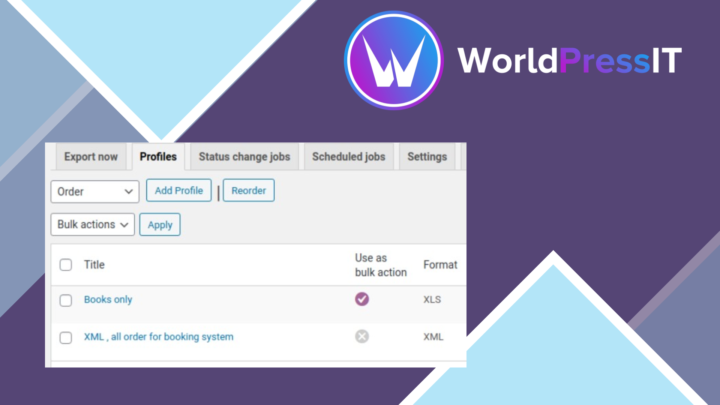
Advanced Order Export For WooCommerce
Export WooCommerce orders and selected custom fields to CSV, Excel, XML or JSON, with filters and scheduled runs for rec…
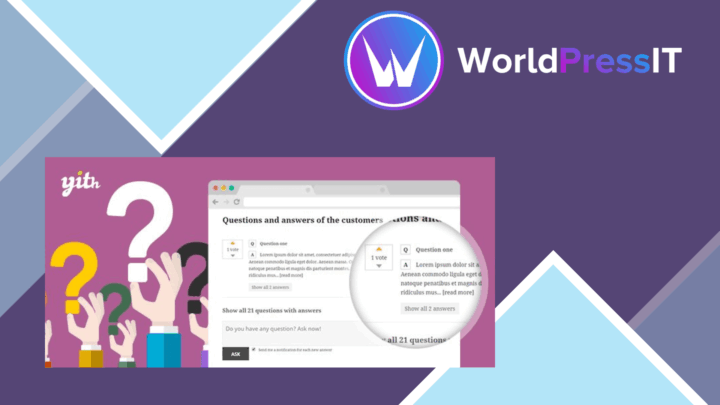
YITH WooCommerce Questions and Answers Premium
Product-level questions and answers give WooCommerce shoppers clearer buying information, while moderation, notification…

CTX Feed Pro
WooCommerce product feeds in XML, CSV, or JSON, with templates, filters, scheduled updates and channel integrations for…