Modern Events Calendar
Create, organise, and present scheduled events with flexible calendar views, recurring entries, location details, ticketing options, and responsive layouts.
Instant access Original unmodified files Free future updates
Modern Events Calendar is built for sites that need more than a basic list of dates. It brings event creation, calendar presentation, location details, recurring schedules, ticketing options, and social promotion into one WordPress event-management tool. The feature set suits businesses, organisations, and individuals that publish events regularly and need visitors to find the right date and information quickly.
Event information in one place
Each event can carry the details visitors generally need before deciding to attend: a time, a location, and ticketing information. That gives the calendar a practical role beyond displaying dates. An organisation listing classes, a business promoting appointments, or a group publishing a programme has a defined place for the core information associated with each entry.
Recurring events are another useful part of the model. Regular sessions do not need to be treated as entirely separate one-off entries, which keeps repeated programming more manageable. The feature is particularly relevant to schedules that repeat over time rather than to occasional announcements.
Views for different schedules
The plugin offers several ways to present the same event data:
- Monthly views for scanning a broad programme.
- Weekly views for a closer look at a busy schedule.
- Daily views for events grouped around a specific date.
- List formats for a straightforward, sequential event feed.
This range gives site owners a way to match the display to the schedule. A monthly calendar helps visitors understand the shape of a programme, while a list is more suitable when the priority is reading event titles and details in order. Visitors are not forced into one calendar format for every type of event page.
Presentation and promotion
Customisable event templates provide control over how event information fits the rest of the site. The stated aim is to match the calendar to existing branding rather than leave the schedule looking like an unrelated section. Responsive design also matters here: the calendar is intended to remain usable across desktop and mobile screens, where a dense monthly grid and a long event list place different demands on the layout.
Google Maps integration adds location context and navigation support to event listings. Social sharing options extend the event beyond the calendar itself, giving visitors a direct way to pass an event on through social platforms. Together, these features cover two practical parts of event publishing: helping people reach the venue and helping more people discover the listing.
What to weigh
The breadth of views and presentation options brings a configuration cost. Choosing between monthly, weekly, daily, and list displays, then shaping templates to fit a site’s branding, requires more decisions than publishing a simple date-and-link list. That flexibility is useful for a developed event programme, but it is more machinery than a small site with only occasional events needs.
The vendor also names support for various payment gateways without identifying which gateways are included. Ticket sales and reservations therefore need a compatibility check before they become part of a live booking process. The same caution applies to the wider ticketing workflow: the supplied details confirm ticketing options and payment support, but do not explain checkout behaviour, reservation rules, or the administration of attendees.
Who it suits
Modern Events Calendar makes the strongest case for sites with a recurring or varied programme: organisations publishing weekly activities, businesses promoting scheduled events, and groups that need several calendar views for the same information. Google Maps, social sharing, responsive layouts, and branded templates address the public-facing side of that work, while recurring entries reduce repetition in the schedule itself.
For a single occasional event, its range may be unnecessary. For a site where dates, locations, recurring sessions, and ticketing all need a visible home, the combination is more coherent than assembling each presentation requirement separately. Confirm the payment gateway fit first, then choose the views and template approach that match the audience rather than enabling every option by default.
The verdict
Download Modern Events Calendar and see for yourself
You get the full Modern Events Calendar release (v7.35.1), ready to install, plus every update that follows. One click and it is yours.
Download Modern Events Calendar v7.35.1- Instant download
- Original developer files
- Updated 3 Sep 2026
Related reviews
Browse allBookingPress Service Package Addon
Bundle several BookingPress services into one purchasable offer, with flexible package pricing, payment options, email n…
BookingPress Pro
Appointment scheduling, availability, payments and client records in one WordPress workflow, with responsive forms and e…
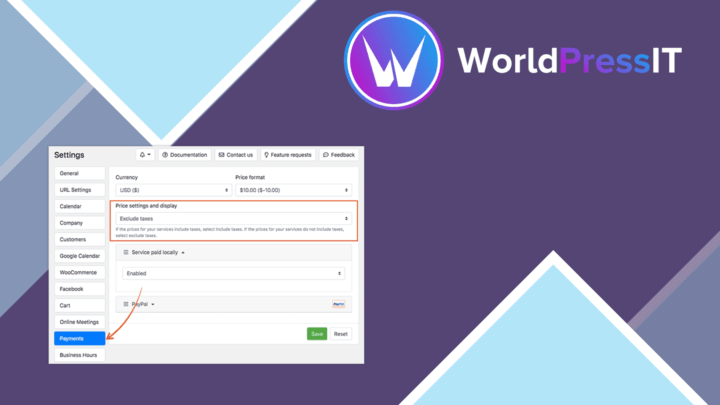
Bookly Taxes Add-on
Automated tax calculation for Bookly services, with configurable rates by service and region, currency support, and repo…