iBid Multi Vendor Auctions Theme
Auction marketplace theme for WooCommerce sites where multiple vendors list products, manage bids and complete sales through a structured storefront.
Instant access Original unmodified files Free future updates
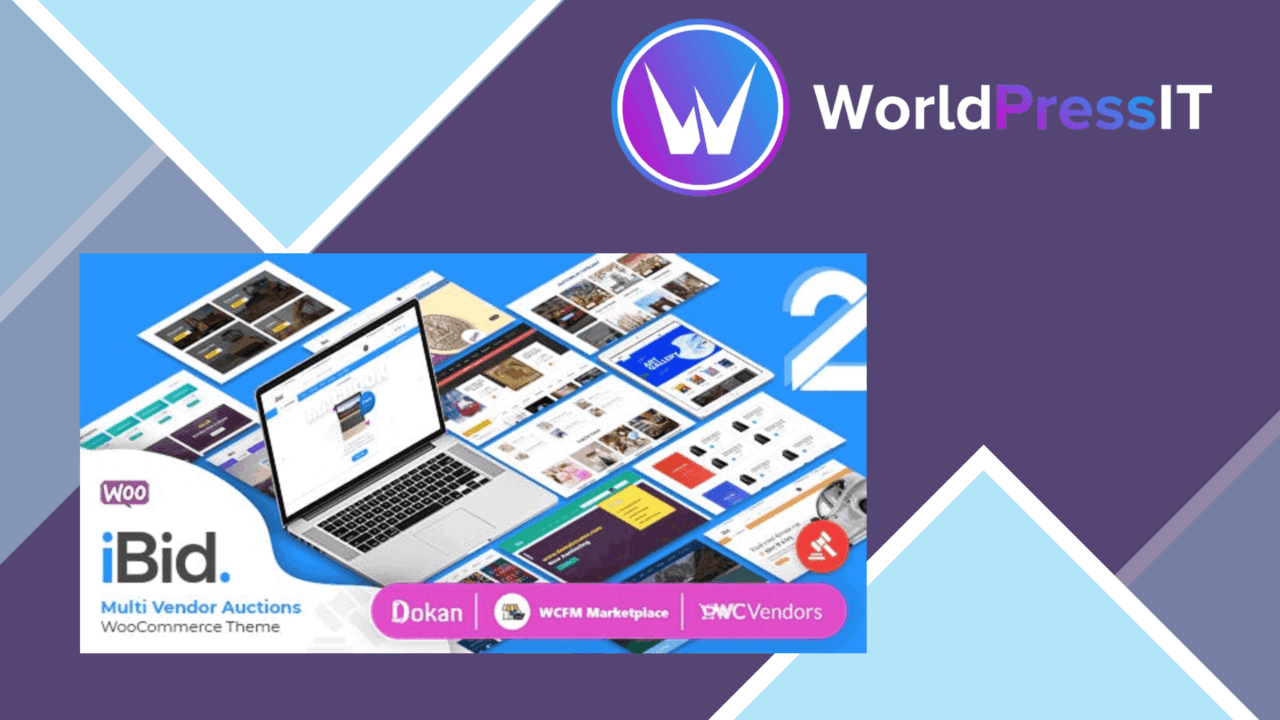
iBid Multi Vendor Auctions Theme is built for a specific WordPress project: a WooCommerce marketplace where several sellers publish items for auction and buyers compete through bids. Its purpose is broader than presenting products in a catalogue. The theme brings vendor listings, auction rules, buyer accounts and transaction handling into one storefront, giving an auction operator a starting point for a marketplace rather than a conventional online shop.
Built around auctions
The central strength is the way the feature set follows the auction model. Sellers receive support for managing their own listings, while the site owner can define the rules that govern each sale. Bid increments, auction duration and reserve prices are all named as configurable settings. Those controls cover the basic mechanics needed to distinguish an auction listing from a fixed-price product.
This makes the theme a closer fit for an auction catalogue than a general-purpose WooCommerce design. A marketplace dealing in collectables, used goods, specialist equipment or other items sold competitively has a clear reason to use those controls. The theme’s design is also described as modern, clean and responsive, with layouts intended to work across desktop, tablet and mobile screens.
Tools for both sides
iBid addresses the two account types that matter in a multi-vendor marketplace. Vendors can manage auction listings, while buyers have a dashboard for following bids, purchases and account status. That division gives sellers a defined place to handle their activity and gives bidders a way to keep track of participation beyond the individual product page.
- Vendor support for creating and managing auction listings.
- Bid increments, auction duration and reserve-price settings.
- Buyer and vendor dashboards covering bids, sales and account status.
- Search and filtering tools for finding particular auctions.
- Email notifications for bidding updates and auction reminders.
- Payment gateway support including PayPal and Stripe.
Finding and finishing sales
Search and filtering are important in a marketplace where listings can come from many independent sellers. The stated filtering tools are intended to help buyers reach specific auctions quickly instead of browsing an undifferentiated product grid. Email notifications add a second route back to the marketplace, covering bidding updates and reminders as an auction progresses.
Payment handling is connected to the WooCommerce side of the product, with PayPal, Stripe and other gateways listed among the supported options. That gives the site a familiar transaction layer for completed sales. The vendor also describes the theme as SEO-friendly, so its page structure is intended to support search visibility for the auction catalogue.
Where it falls short
The specialised focus is the first trade-off. iBid is shaped around auctions and multiple sellers, so it is a poor starting point for a simple single-vendor shop or a site that mainly publishes fixed-price products. Much of its value comes from features that those projects would not use.
The second trade-off is operational complexity. Bid increments, reserve prices, auction durations, vendor accounts, buyer accounts, notifications and payment processing all introduce decisions that a standard WooCommerce shop does not need to make. The feature list identifies these controls but does not explain how they interact in unusual cases, such as changing an auction after bids have arrived or handling disputes between vendors and buyers.
There is also limited detail about the payment options beyond PayPal and Stripe, and no explanation of the exact vendor-management workflow. Organisations with specific payout, moderation or auction-policy requirements should treat those areas as questions to resolve before committing to the theme.
Who should use it
iBid suits a business or entrepreneur planning a genuine multi-vendor auction marketplace, particularly one that needs seller-managed listings, configurable bidding rules and buyer-facing account tools in the same WooCommerce site. It also fits projects where search, reminders and responsive presentation matter because the catalogue is expected to grow.
It is less convincing as a general WooCommerce theme. The right choice rests on whether competitive bidding is central to the business model, not simply an occasional feature. For a focused auction platform, iBid presents the relevant building blocks in one design; for a conventional shop, that focus is more likely to add administration than value.
The verdict
Download iBid Multi Vendor Auctions Theme and see for yourself
You get the full iBid Multi Vendor Auctions Theme release (v4.8), ready to install, plus every update that follows. One click and it is yours.
Download iBid Multi Vendor Auctions Theme v4.8- Instant download
- Original developer files
- Updated 26 Oct 2026
Related reviews
Browse all
Alukas
A WooCommerce theme for jewellery retailers, with Elementor layouts, multiple storefront demos, and brand controls for b…

GoldSmith
A WooCommerce theme for jewellery retailers, combining Elementor layouts, product filtering, responsive shop pages and s…

Pinkmart AJAX theme for WooCommerce
AJAX filtering, responsive layouts and pre-built shop designs give WooCommerce stores a quicker route to a tailored reta…